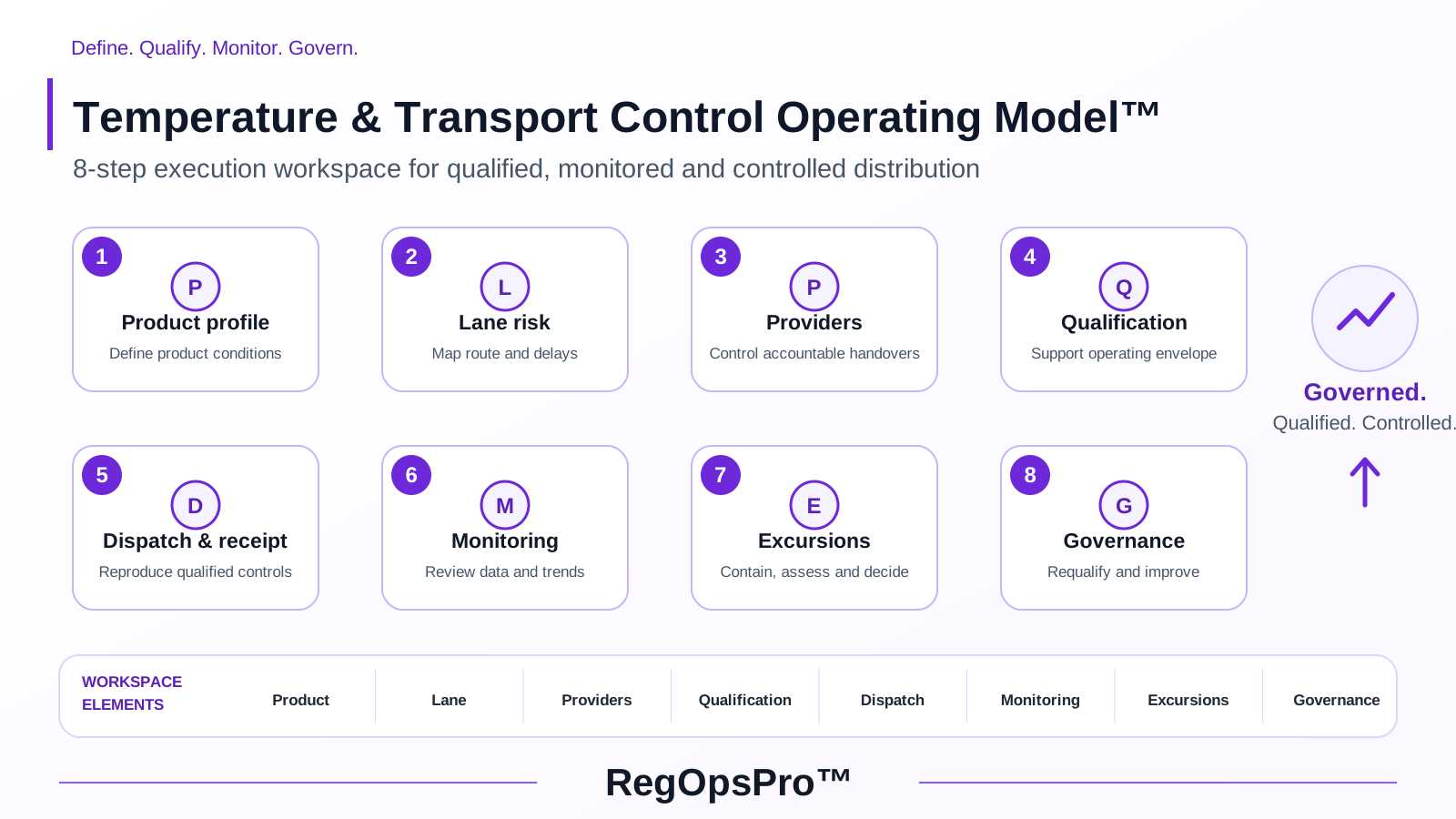
The temperature & transport execution standard
How the model and execution standard fit together. The eight Operating Model stages describe the areas of control covered by this topic. The four-part execution standard is a repeatable way to work through requirements, evidence, decisions and actions, and governance within each of those stages. It is not a second or additional eight-stage process; the four steps are tailored to this topic.
Connect each requirement to the evidence reviewed, the judgement made, the action taken and the follow-up that demonstrates control.
1. Scope and requirementIdentify labelled conditions, stability knowledge, sensitivity, permitted exposure and monitoring needs for each product group.
2. Evidence and challengeConfirm carrier, freight forwarder, hub and subcontractor capability, responsibilities and change-notification controls.
3. Decision and actionStandardise conditioning, packing, device activation, loading, handover, delivery and goods-in checks.
4. Governance and learningPeriodically review routes, providers, equipment, excursions, changes and qualification currency.
 RegOpsPro™