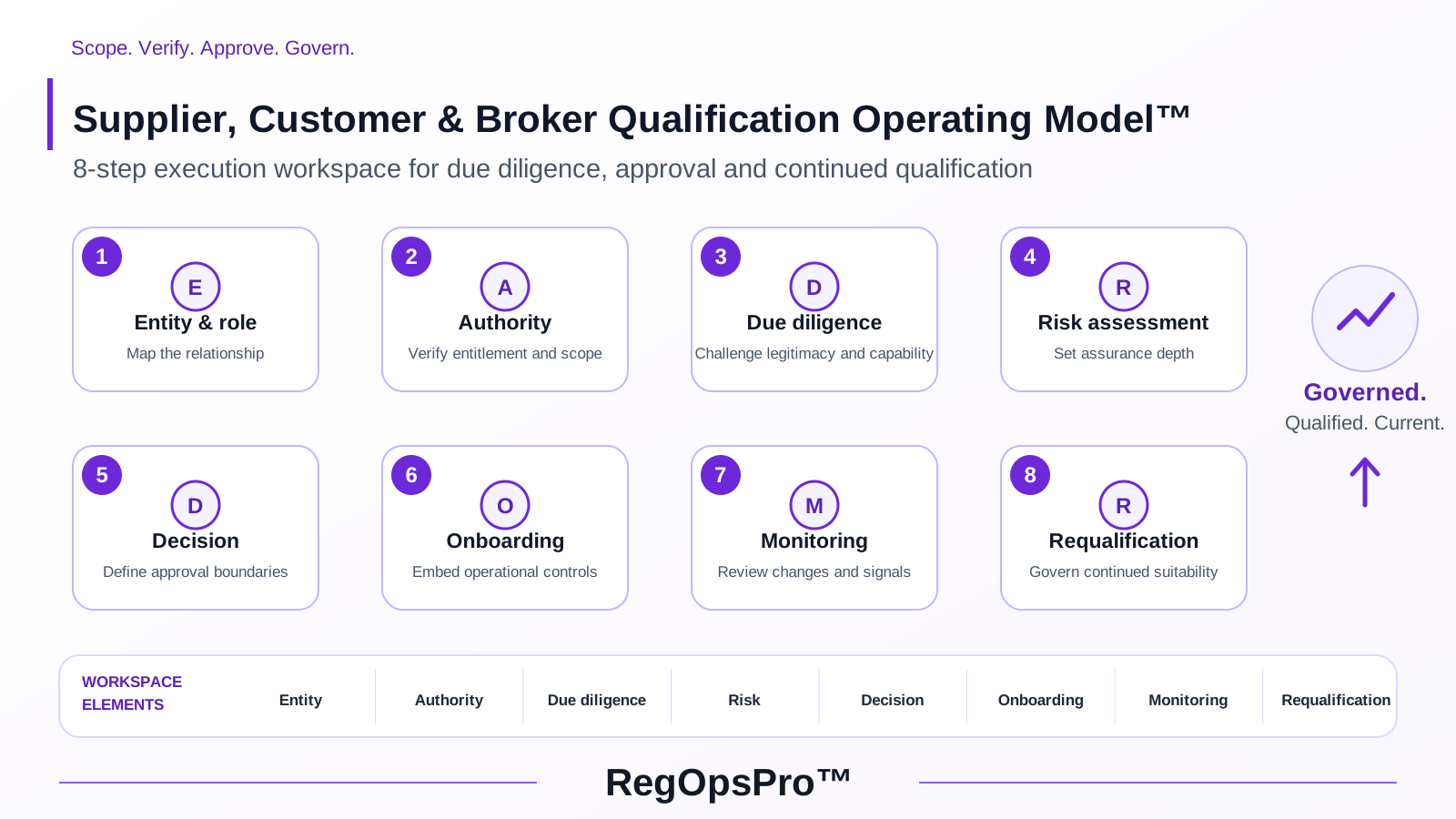
The qualification execution standard
How the model and execution standard fit together. The eight Operating Model stages describe the areas of control covered by this topic. The four-part execution standard is a repeatable way to work through requirements, evidence, decisions and actions, and governance within each of those stages. It is not a second or additional eight-stage process; the four steps are tailored to this topic.
Connect each requirement to the evidence reviewed, the judgement made, the action taken and the follow-up that demonstrates control.
1. Scope and requirementDefine whether the party is a supplier, customer, broker, agent, carrier or mixed-role entity and map the activities it will perform.
2. Evidence and challengeAssess ownership, competence, operating capability, sanctions, integrity signals and relevant quality history.
3. Decision and actionBring authority, due diligence, audit and risk evidence together into an approval recommendation, conditions or rejection.
4. Governance and learningPerform risk-based requalification and provide management visibility of overdue, restricted or high-risk entities.
 RegOpsPro™