 RegOpsPro™
GDP Equipment Qualification & Validation Operating Model™
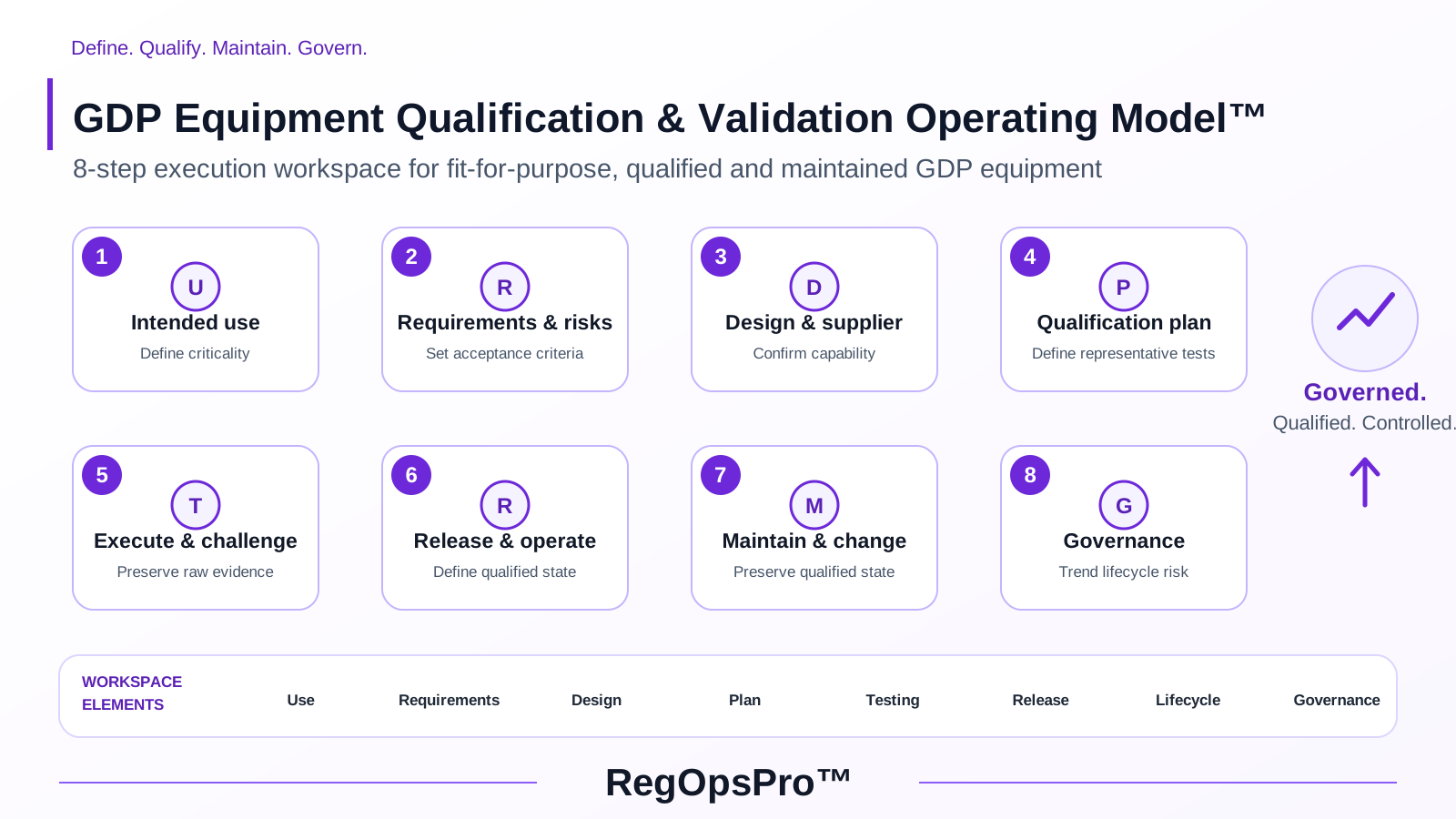
A practical model for defining intended use, translating GDP needs into acceptance criteria, qualifying equipment under representative conditions, controlling release to use and preserving the qualified state through maintenance, calibration, change and requalification.
The GDP equipment qualification execution standard
How the model and execution standard fit together. The eight Operating Model stages describe the areas of control covered by this topic. The four-part execution standard is a repeatable way to work through requirements, evidence, decisions and actions, and governance within each of those stages. It is not a second or additional eight-stage process; the four steps are tailored to this topic.
Set intended use, criticality, requirements and failure risks before choosing the qualification depth.
Assess design and supplier evidence, then plan representative and worst-case qualification tests.
Resolve deviations, define the qualified operating state and preserve it through calibration, maintenance and change.
Trend overdue controls, recurring failures, requalification needs, obsolescence and investment decisions.
Understand what proportionate qualification means, where evidence can be leveraged and where common lifecycle failures arise.
Capture requirements, evidence, test/decision points, actions, lifecycle follow-up and QMS handoff.
Regulatory foundation and applicability
This model supports GDP premises and equipment controls for human-medicines distribution. Qualification depth should reflect intended use and risk; temperature mapping, calibrated monitoring and requalification should be applied where relevant to the actual storage, handling or transport system.
- EU GDP Guidelines, 2013/C 343/01 — Chapter 3 Premises and Equipment
- MHRA Inspectorate — Temperature mapping: an introduction
- MHRA Inspectorate — Quality Risk Management in GDP transportation
Source review: 22 September 2026. Confirm current GDP requirements, equipment configuration, product needs and organisation procedures before formal qualification or release-to-use decisions.
Put the qualification model into practice
Use the Practitioner Guide™ for judgement, the Professional Workspace for structured working evidence and Ask RegOps for grounded support.